Rotational molding products
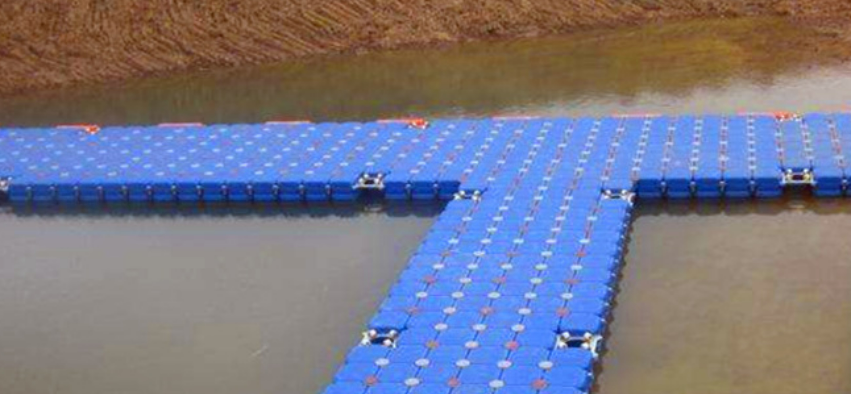
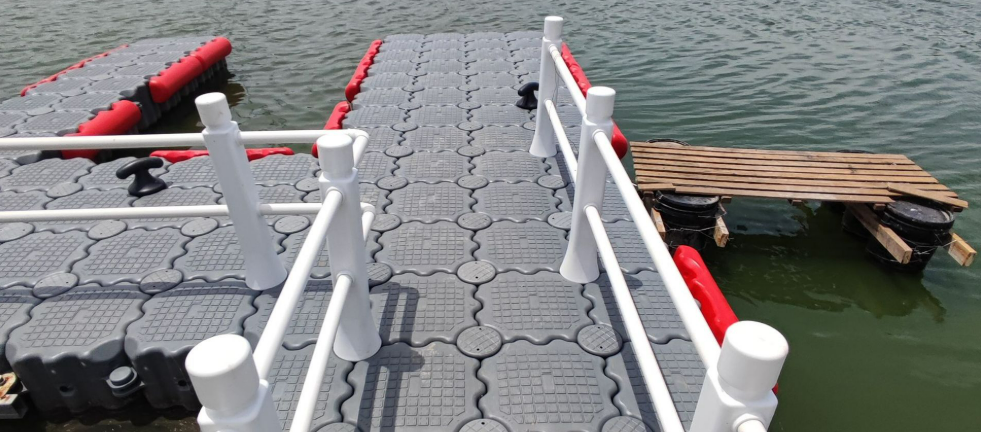

Polyethylene platform pontoon HDPE
Request InformationProduct Details
Modular Floating Platform System
The standard platform unit is assembled from four HDPE (High-Density Polyethylene) floats, each measuring 500 mm (W) × 500 mm (L) × 400 mm (H), forming a 1 m² stable module. Components are manufactured via blow molding and feature integrated mushroom-head connectors with short stainless steel bolts for secure, tool-assisted assembly.
Core Design Features
Material: UV-stabilized HDPE, resistant to corrosion, impact, and biofouling
Modularity: Units interlock to form scalable platforms of arbitrary shape and size
Optional Enhancements: – Galvanized or powder-coated steel support frames for structural reinforcement – Wood, composite, or non-slip polymer decking for surface finishing
Typical Applications
Private and commercial boat docks, marinas, and mooring systems
Pedestrian floating bridges and access walkways
Recreational platforms for swimming, sunbathing, or events
Aquaculture infrastructure (e.g., feed platforms, net support)
Water sports facilities (e.g., kayak launch pads, paddleboard docks)
Site-Specific Customization
Final system configuration is engineered based on local hydrological and geotechnical conditions:
Water depth and fluctuation range
Tidal amplitude (where applicable)
Seabed or riverbed composition (e.g., silt, rock, sand)
Shoreline geometry and embankment stability
Our engineering team uses this data to determine float density, anchoring strategy, frame layout, and decking specifications—delivering detailed fabrication and installation drawings tailored to the project.