HDPE
- HDPE sheets, rods, and profiled components excel in lightweight design, corrosion resistance, ease of processing, and cost efficiency. They outperform metals in maintenance-free longevity and surpass conventional plastics in stiffness and environmental stress crack resistance (ESCR), making them ideal for structural applications in chemical, construction, and mechanical industries.


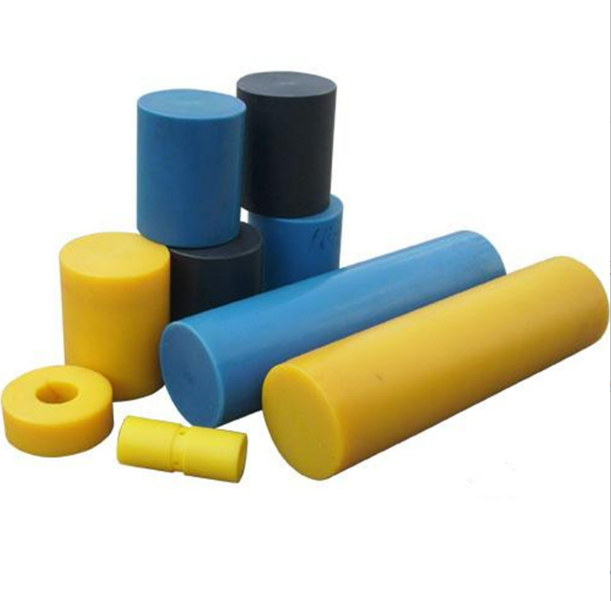

HDPE ROD
Request InformationProduct Details
1. Basic Physical Parameters:
• Diameter & Length:
General Grade: Standard range (Φ10mm~Φ300mm) with basic lengths (1m/2m, cut-to-order).
Engineering Grade: Extended range (Φ5mm~Φ500mm, including custom sizes) and export-grade lengths (2.44m).
High-End Grade: Widest range (Φ2mm~Φ600mm) with precision-controlled lengths (1m/2.44m/3m), suitable for demanding dimensional requirements.
• Density & Molecular Weight:
General Grade: Medium molecular weight (MMWHDPE, 200k~500k) with moderate density (0.94~0.96g/cm³).
Engineering Grade: High molecular weight (HMWHDPE, 500k~1000k) and modified density (0.95~0.97g/cm³).
High-End Grade: Narrow-distribution medium-high molecular weight (300k~800k) and ultra-uniform density (0.950±0.002g/cm³), critical for consistent performance in precision applications.
• Standards: Aligns with GB/T 1446 (dimensional), ASTM D4773 (length), ISO 1183-1 (density), and GB/T 3682 (molecular weight).
2. Core Mechanical Properties:
• Tensile Strength:
General Grade: 25~35MPa (basic load-bearing).
Engineering Grade: Enhanced to 35~50MPa via glass fiber reinforcement (trade-off: lower elongation, see below).
High-End Grade: Stable at 35±2MPa, prioritizing consistency over extreme strength (critical for precision components).
• Elongation at Break:
General Grade: High ductility (200%~400%).
Engineering Grade: Reduced (150%~250%) due to modification (e.g., fiber reinforcement).
High-End Grade: Balanced (250%±30%), retaining flexibility while ensuring uniformity.
• Impact Toughness (Low-Temperature Performance):
General Grade: 20~50kJ/m² (-20℃).
Engineering Grade: Improved to 30~60kJ/m² (-30℃).
High-End Grade: Superior (-40℃, 40~70kJ/m², no breakage), suitable for extreme cold environments.
• Hardness:
Engineering Grade: Highest (70~80D, modified for rigidity).
High-End Grade: Balanced (65±3D) with exceptional uniformity, avoiding brittleness or softness.
• Standards: Tested via GB/T 1040/ASTM D638 (tensile/elongation), GB/T 1843/ASTM D256 (impact), and GB/T 2411/ASTM D2240 (hardness).
3. Thermal Performance and Chemical Resistance:
• Service Temperature Range:
General Grade: Basic (-40℃~80℃, short-term 100℃).
High-End Grade: Extended (-50℃~90℃ continuous use), enabling deployment in harsh climates or high-temperature systems (e.g., food machinery).
• Chemical Resistance:
General Grade: Resists dilute acids/alkalis, saltwater, and ethanol (except concentrated nitric/sulfuric acid).
High-End Grade: Expanded resistance to organic solvents (kerosene, diesel) and steam (80℃), critical for chemical pipelines or industrial equipment.
• Standards & Applications: Complies with GB/T 2918 (environmental conditioning), HG/T 2690 (chemical lining), and ASTM D543 (chemical resistance). Typical uses: chemical transport, food processing, and low-temperature engineering.